< Terug naar overzicht
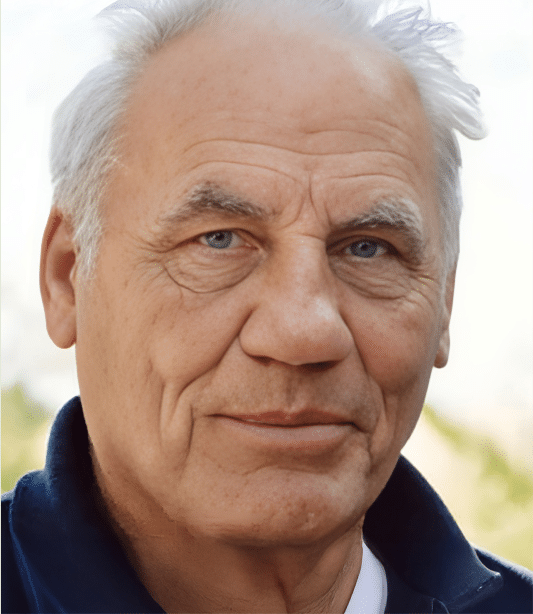
foto van dr. Ryke Geerd Hamer

Dr. Ryke Geerd Hamer

Dr. med. Mag. theol. Ryke Geerd Hamer (1935–2017) was a German physician and internist, trained in medicine, physics, and theology. He worked at university hospitals in Tübingen and Heidelberg, among other places, and gained recognition for various medical patents.

Following personal experiences, he discovered Germanische Heilkunde. Through this, he showed the world that there is a specific cause behind every illness. He described connections between life events, the nervous system, and physical processes.

His knowledge is of vital importance to each of us. It prevents us from undergoing unnecessary treatments, which can sometimes even be very harmful. Dr. Hamer teaches us to understand our own bodies, so that we can determine for ourselves what we need to stay healthy.

Biography

Fields of study / degree programs:

Ryke Geerd Hamer’s life’s journey was shaped by his medical and theological education at the University of Tübingen, his work as an internist, and profound personal experiences. The death of his son and his own illness led him to investigate the connection between shock and disease.

In the early 1980s, this research led to the development of Germanische Heilkunde: five biological laws of nature that explain the origin of disease. From that point on, Hamer dedicated his life to spreading these insights through books, lectures, interviews, and seminars.

Fields of Study / Education:

  • Medicine at the University of Tübingen
    • Graduated from the Faculty of Medicine in 1962
    • In 1963, he received his license to practice medicine (Dr. med.)
    • Completed his specialization in internal medicine in 1972
  • Theology at the University of Tübingen
    • Master’s degree in Protestant theology in 1957
  • Physics at the University of Tübingen
    • Took courses in physics during his studies in theology and medicine, but did not earn a degree in physics.

Professional Activities

  • Worked as a physician in hospitals
  • Practicing physician
  • 1972: Specialist in internal medicine
  • Internist at the University Hospital of Tübingen
  • From 1981: Senior physician at the cancer clinic of the University Hospital of Munich
  • Developer and inventor of medical instruments, including:
    • A special scalpel for plastic surgery
    • A special bone saw
    • An adjustable treatment table
    • A device for transcutaneous serum diagnostics

Important events

  • 1976: Plans to move with his family to Italy to provide free medical care there
  • 1978: His son Dirk is shot by Vittorio Emanuele of Savoy near Corsica. Dirk dies at Heidelberg University Hospital after multiple surgeries
  • Shortly after his son’s death: He is diagnosed with testicular cancer
  • Early 1980s: Begins research into a possible link between illness and traumatic experiences.

Boeken

Cover boek Kanker

Kanker en alle zogenaamde ziekten